Picture two sellers in Woodland Hills, both listing homes the same week in July, both getting what they thought was a clean, standard California home inspection. One seller is a few blocks north of Ventura Boulevard in a ranch-style house from the 1960s. The other is south of the Boulevard, in a gated pocket climbing toward Mulholland. Both inspections come back with repair requests. Neither seller saw their specific issue coming, because they were both picturing the same generic checklist. They were listing in two different markets that happen to share a ZIP code.
That is the piece of this neighborhood that a median price will never tell you. Woodland Hills is not one inspection risk. It is two, split almost exactly along Ventura Boulevard, and knowing which side of that line your address falls on matters more to your closing timeline than knowing what your neighbor's house sold for last spring.
One Boulevard, Two Different Homes
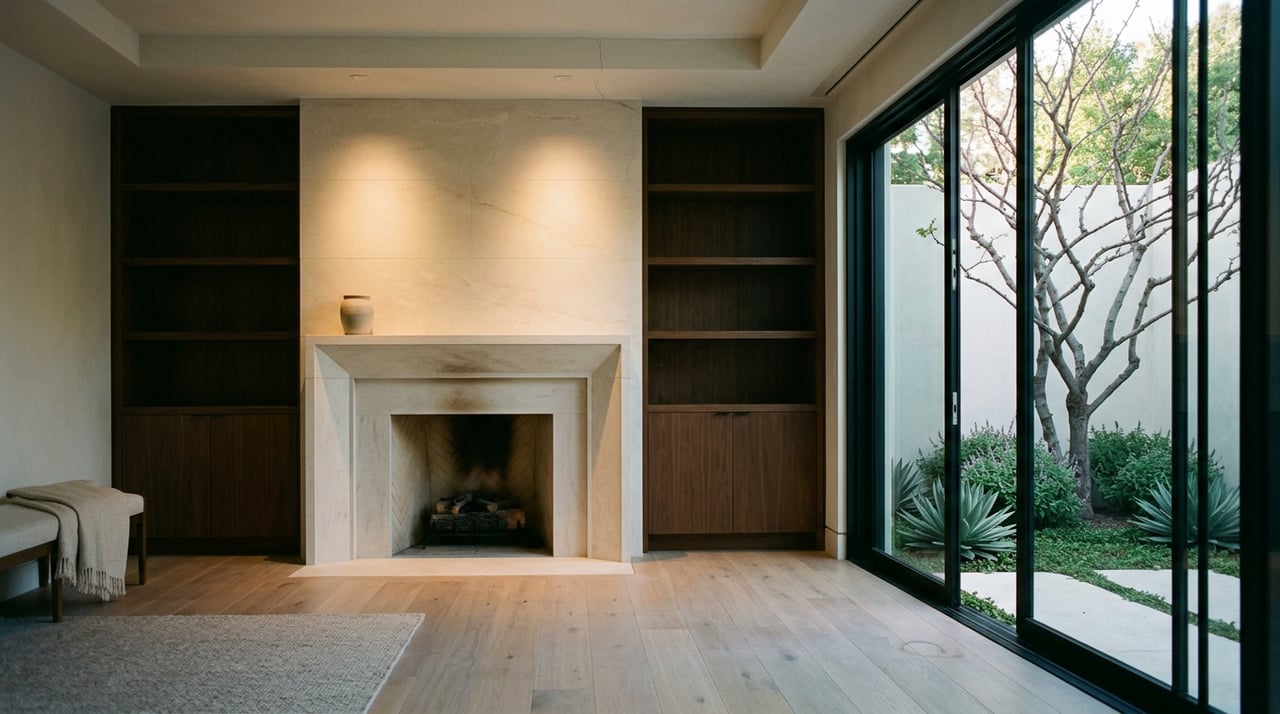
North of Ventura Boulevard, toward Topanga Canyon Boulevard and De Soto Avenue, the housing stock is largely flat-lot ranch and two-story construction built between the 1950s and the 1980s. Good-sized lots, straightforward foundations, family-oriented streets. South of the Boulevard, the land climbs into the Santa Monica Mountains, and the housing stock shifts to canyon-view custom builds and small gated enclaves such as Natoma Estates, Winnetka Estates, Westchester County Estates, and Mulholland Estates. Closer to Warner Center sits a third, smaller submarket entirely: condos and townhomes built around the commercial core.
None of that shows up in a portal search filtered by bedroom count. It shows up the day a buyer's inspector walks the property, because the two halves of Woodland Hills fail inspection for almost opposite reasons.
What Actually Trips an Inspection Here
| Sub-area | What tends to trigger repair requests | What a standard inspection often misses |
|---|---|---|
| Flats, north of Ventura Blvd | Original electrical panels, galvanized plumbing, aging HVAC in homes built 1950s to 1980s | Whether prior owners pulled permits for panel or repipe work |
| Hillside, south toward Mulholland | Slope movement, drainage, retaining wall condition | Soil stability, which a general home inspector is not trained or equipped to evaluate |
| Warner Center condos | HOA reserve health, deferred building-wide maintenance | Building-level issues an individual unit inspection won't surface |
The table looks tidy. The actual escrow experience rarely is, because sellers usually only prepare for the version of inspection trouble they've heard about generally, not the version that applies to their specific street.
The Flats: Small Fixes, Big Credits
In the flats, the pattern is remarkably consistent. Homes from the 1960s and 70s often still carry their original electrical panels, and inspectors flag older panel brands the moment they see the label. Galvanized supply lines and aging HVAC equipment show up almost as often. None of this is dramatic on its own. The problem is timing.
Local repair data suggests something close to six in ten inspection renegotiations in this kind of housing stock trace back to items that would have cost under $5,000 to address before listing. Once a buyer's inspector puts the same item in a formal report, that number tends to grow into a credit request of $15,000 or more, because buyers price in uncertainty and contractor markup on top of the repair itself. A seller who swaps a panel or reroutes a plumbing run ahead of listing is fixing a $3,000 problem. A seller who waits for the inspection report to name it is negotiating a $15,000 one.
The Hillside: What the Inspector Can't See
South of the Boulevard, the failure mode is different because the risk sits underground. A standard home inspection is built around roofs, systems, and visible structure. It is not built to evaluate slope stability, and most general inspectors will say so directly if you ask. That gap is exactly where hillside deals stall.
Under the Los Angeles Municipal Code, soils and geological reports become a requirement for grading work once cut or fill exceeds 5,000 cubic yards, or whenever a Grading Pre-Inspection Report calls for one, or when a proposed foundation doesn't conform to the code's existing standards. Practically, that means any current owner who added a pool, regraded a slope, or built a retaining wall on a hillside lot in Woodland Hills has likely already touched this exact ordinance. Buyers and their agents increasingly ask for that paperwork before removing contingencies, and a seller who can't produce it loses time explaining a gap rather than closing a sale.
A pre-listing geological or soils assessment for a single property, separate from the far larger engineering report required for new construction or major grading, typically runs $1,500 to $3,500. That is a modest number against a seven-figure sale, and it is the kind of documentation that turns a hillside escrow from a scramble into a formality.
Small gated enclaves add a second friction point that has nothing to do with the physical property at all. Pockets like Natoma Estates or Winnetka Estates simply don't sell often, which means an appraiser working a hillside contract may have only a handful of true comparables to lean on. Sellers and agents who arrive with a prepared comp package covering the surrounding gated communities, not just the immediate street, give the appraisal a much smoother path than sellers who leave that work for the appraiser to piece together alone.
What the Numbers Say Right Now
The market data backs up the two-market read, if you look past the single headline figure. Redfin's numbers for the three months ending May 2026 showed the median sale price in Woodland Hills down 5.2 percent year over year, even as the average sale price for the most recent month climbed 5.7 percent to $1.33 million. A falling median next to a rising average is not a contradiction. It is what happens when a run of higher-priced hillside sales pulls the average up while the larger volume of flats transactions pulls the median down. The two halves of this neighborhood are moving in different directions at the same time, and a single median line flattens that entirely.
One market analysis focused specifically on Woodland Hills's upper hillside tier put the median sale price near $2.19 million in June 2026, while broader all-tier figures for that same season sat closer to $1.2 million to $1.4 million. As of mid-August 2026, active listings across the neighborhood numbered 284, with average days on market at 58 and price per square foot near $670. That 58-day figure is notably longer than the 46-day average Redfin reported for spring, and while some of that stretch is ordinary late-summer seasonality, some of it is the two inspection paths described above eating time inside escrow rather than before it.
Before You List, Regardless of Which Side You're On
- Pull your electrical panel brand and plumbing material before your first showing, not after an inspector names them for you
- If you're on a hillside lot, ask whether a soils or geological assessment makes sense before you go active, especially if you've done any grading or retaining wall work
- Gather permits for any past electrical, plumbing, or structural work so a buyer's agent isn't asking for documents mid-escrow
- If you're in a small gated enclave, expect the appraisal conversation earlier than usual, and come prepared with comps from comparable communities, not just your own street
- Treat any deferred maintenance under $5,000 as cheaper to fix now than to negotiate later
A Few Questions Sellers Ask
Is a pre-listing soils assessment the same as the full geotechnical report required for new construction? No. A single-property assessment done ahead of a sale is a smaller-scope, lower-cost report meant to flag slope or drainage concerns before a buyer's inspector does. A full geotechnical report tied to grading or new construction under city code is a much larger engineering undertaking with its own review process.
How long is a standard inspection contingency in California? Contingency periods are negotiated per contract, but 17 days is a common default for the inspection period in this market. That window is often where flats and hillside deals diverge, since flats renegotiations tend to center on repair costs while hillside renegotiations more often stall on missing documentation.
Does every Woodland Hills home need a soils report before listing? No. It matters most for hillside lots, and especially for any property where grading, pools, or retaining walls have been added since the original build. A flats home on a level lot with a documented repipe and panel upgrade has an entirely different pre-listing checklist.
If you're weighing when to list, or trying to figure out which side of this equation your address falls on, that's exactly the kind of groundwork worth doing with someone who already knows the terrain block by block. Kevin Goldman has spent his career treating every listing with the same attention to detail he learned in professional kitchens: nothing gets served until it's actually ready. Reach out for a home valuation and a straight read on what your specific street means for your specific sale.