If you are shopping for a Woodland Hills view home, it is easy to fall in love with the photos before you understand the tradeoffs. A sweeping outlook can feel like the whole reason to buy, but the best view properties are not just dramatic, they are usable, maintainable, and supported by the right zoning and permit history. If you want to know whether a view home is truly worth the premium, this guide will help you look past the first impression and ask smarter questions. Let’s dive in.
Why Woodland Hills view homes are different
Woodland Hills sits within the Canoga Park, Winnetka, Woodland Hills, and West Hills Community Plan area, and that matters more than many buyers realize. In Los Angeles, hillside properties are treated as a distinct regulatory category, with rules that can affect what you can build, remodel, or even assume about a lot.
That is especially important for view homes because many of the most desirable properties sit on sloped parcels. The City notes that hillside neighborhoods are prized for panoramic views, but it also makes clear that site-specific rules can vary by parcel. In practice, that means you should verify the property in ZIMAS and review the zoning code instead of relying on neighborhood generalizations.
A helpful detail to know is that an H suffix in the zoning label does not automatically mean the Baseline Hillside Ordinance applies. Buyers should confirm Hillside Area status directly, because hillside rules can affect setbacks, grading, height, fire protection, and street access. Those details can shape both your day-to-day use of the home and your long-term plans for improvements.
How to judge the view itself
Not all views carry the same value. The real question is not just whether a home has a view, but whether that view feels durable and useful from the places where you will actually spend time.
In hillside settings, orientation, slope, setbacks, and height limits can all influence how much of the panorama you see from the main living areas. A home with a strong view from the family room, kitchen, primary suite, or main patio may deliver more daily value than a home that only captures a narrow angle from one deck.
You should also think about whether the view depends on a temporary gap. If the sightline exists only between neighboring roofs or trees, it may feel less secure than a view protected by elevation and topography.
Privacy is part of the value equation too. A broad outlook can be appealing, but if nearby windows, yards, or streets look directly into your main rooms or outdoor areas, the experience may not feel as relaxing as the listing suggests.
Questions to ask during a showing
- Does the view feel protected by the lot’s elevation and topography, or does it depend on a narrow opening?
- Can you enjoy the view from the main living spaces, not just one balcony or corner room?
- How private are the interior spaces and outdoor areas from surrounding homes and streets?
- Does the home’s layout make the view part of daily life, or is it mostly visual marketing?
Look beyond the photos at outdoor usability
A stunning backdrop does not always mean a practical lot. With Woodland Hills view homes, part of the premium should be tied to how well the outdoor space works for real life.
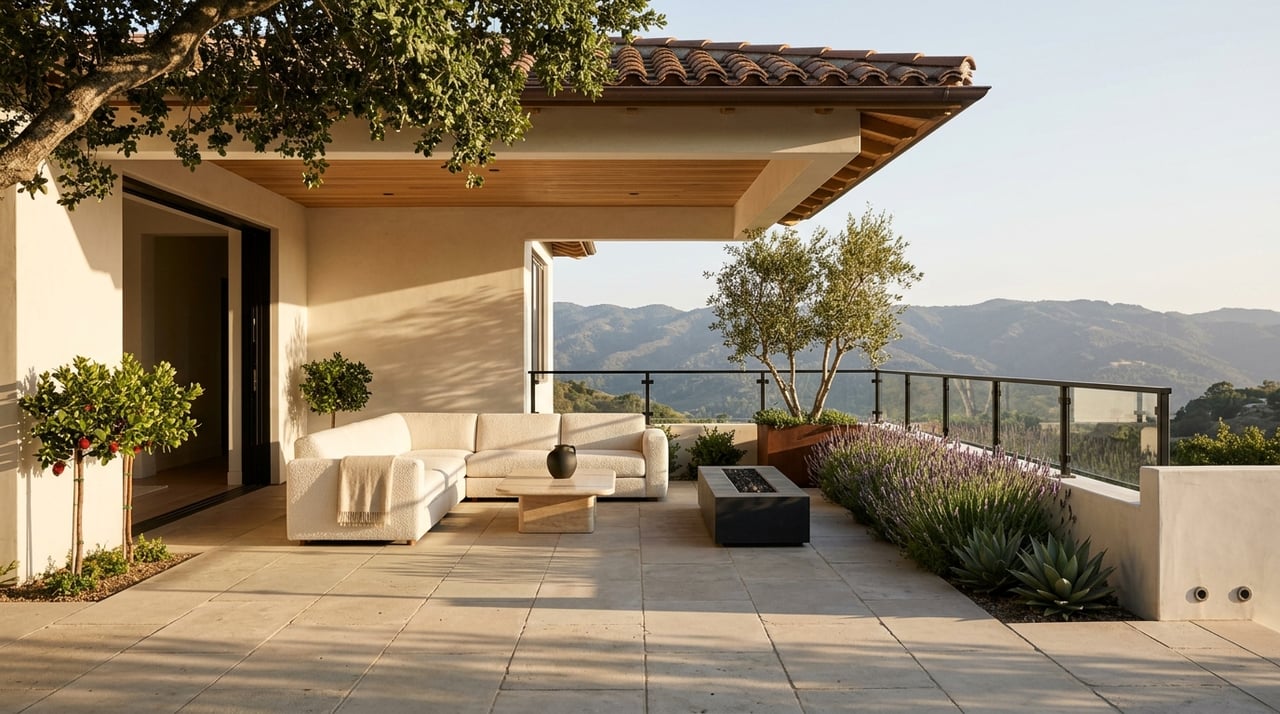
You may see beautiful listing images of decks, terraces, or patios, but the better question is whether those spaces are truly functional. Is there enough level area for dining, lounging, or entertaining, or is most of the lot steep terrain, stairs, and circulation space?
Outdoor areas also come with maintenance responsibility. County wildfire-preparedness guidance treats features like deck or patio covers, walls, vents, roofs, gutters, and driveway access as part of the home’s safety envelope. That means your outdoor living area is not just an amenity, it is also part of the property you will need to maintain carefully.
Signs of a more usable view lot
- Outdoor space has room for everyday furniture and movement
- Access between indoor and outdoor living feels easy
- The lot offers more than just steep hillside behind or below the house
- Decks, terraces, and hardscape feel practical, not just decorative
Why zoning and Hillside Area status matter
For view-home buyers, zoning is not a box to check at the end. It is central to understanding what you are buying.
Los Angeles requires parcel-specific review for hillside properties, and the rules can vary from one lot to another. Hillside status can affect setbacks, height, grading, fire protection, street access, and sewer connection, all of which may influence future remodeling, additions, or rebuilding plans.
This is one reason two homes on nearby streets can have very different improvement potential. Even if they look similar from the curb, their zoning and site conditions may not be the same.
If you are considering updates, expansions, a pool, or changes to outdoor living areas, it is smart to verify the parcel’s Hillside Area status early. That step can help you avoid building assumptions into your offer price.
Permit history deserves extra attention
When a Woodland Hills view home sits on a slope or has custom site work, permit history matters. The Los Angeles Department of Building and Safety allows buyers to research permits, inspections, and other building records online, which can be especially useful for hillside properties.
LADBS requires grading permits for a range of hillside work, including hillside grading, slope repairs, landslide repairs, tract or mass grading, retaining-wall cuts, backcuts and backfill, and excavations for basements or pools in hillside areas. In simple terms, if a property has had meaningful site work done, you want to know whether the records line up.
This is particularly important with view homes because the features that make a property attractive can also be the ones that carry more construction complexity. A newer retaining wall, expanded deck, altered pool area, or basement excavation may be perfectly fine, but it should match the property’s permit history.
Areas to review closely
- Retaining walls or terrace walls that look newer than the house
- Expanded decks, patios, or hardscape improvements
- Pool work or excavation near slopes
- Additions or basement changes on a hillside parcel
- Any visible signs of unfinished or improvised construction
Pay close attention to slope and drainage
Topography is a major part of how hillside properties are regulated and evaluated. The City’s hillside guidance references slope analysis maps prepared by a licensed surveyor or civil engineer using a topographic contour map, which shows how seriously slope conditions are treated.
For you as a buyer, that means visible drainage and site-stability clues deserve close attention during inspections. A beautiful view lot can come with hidden costs if water is not being managed well.
Signs like ponding, runoff paths, erosion, staining on walls, cracking, or settlement should prompt deeper review. The same goes for retaining walls and yards that appear to drain poorly.
If you plan to remodel or rebuild, keep in mind that future improvement costs may be higher than on a flat lot. The City’s hillside standards also include topics such as fire protection and street access, which can add complexity to a project.
Fire risk and access are part of the price
One of the biggest hidden costs with some view homes is wildfire readiness. County fire guidance says Fire Hazard Severity Zones are checked parcel by parcel through a GIS viewer, so you should evaluate the actual property rather than make assumptions based on the broader neighborhood.
If a home is in a High or Very High Fire Hazard Severity Zone, AB-38 requires a compliant defensible-space inspection report during escrow. That is an important part of due diligence because it ties wildfire readiness directly to the transaction.
County materials also emphasize roof and gutter maintenance, ember-resistant vents, non-combustible siding and fencing, 100 feet of defensible space, and driveway and access-road dimensions that support emergency response. These are not abstract issues on a hillside lot. They can affect carrying costs, upkeep, and future planning.
Fire and access items to ask about
- Roof material and visible debris buildup
- Gutters and screens
- Vents, eaves, and soffits
- Deck and patio construction
- Driveway width and gate operation
- Visible address numbers
- Vegetation clearance around the home
Landscaping also plays a role in the ownership equation. County guidance recommends maintaining cleared vegetation around the structure, keeping branches away from roofs and chimneys, limiting combustible materials near the home, and preserving clear access for responders.
When the premium is worth it
The strongest view-home premium is usually easier to justify when the view is protected by topography rather than chance. You also want outdoor space that feels livable, not just photogenic.
Beyond that, the property should not come with unusually high mitigation or improvement costs tied to slope, access, fire requirements, or unresolved permit questions. A home can still be special even if it needs work, but the price should reflect those realities.
In other words, a great Woodland Hills view home is usually a balance of three things: the quality of the view, the usability of the lot, and the practicality of ownership. When those line up, the premium often makes much more sense.
If you are weighing a hillside purchase in Woodland Hills, having a local guide who can help you slow down, ask the right questions, and compare lifestyle value against real-world ownership details can make the process a lot clearer. If you want a boutique, detail-first perspective on Woodland Hills homes, connect with Kevin Goldman.
FAQs
What makes a Woodland Hills view home different from a flat-lot home?
- A Woodland Hills view home may be subject to parcel-specific hillside rules related to setbacks, grading, height, fire protection, and street access, which can affect both current use and future improvements.
How can you verify Hillside Area status for a Woodland Hills property?
- You should verify the parcel in ZIMAS and review the zoning code rather than assume the whole neighborhood follows the same hillside rules.
Why does permit history matter for Woodland Hills view homes?
- Permit history can help you confirm whether visible work such as retaining walls, grading, deck expansions, pools, or additions was properly recorded and approved.
What should you inspect on a Woodland Hills hillside lot?
- Pay special attention to drainage, runoff paths, erosion, cracking, settlement, retaining walls, outdoor hardscape, and any signs that site work may have been done without matching records.
How do wildfire rules affect Woodland Hills view-home buyers?
- Fire readiness can affect escrow, maintenance, and ownership costs, especially if the parcel is in a High or Very High Fire Hazard Severity Zone and requires AB-38 defensible-space documentation.
How do you know if a Woodland Hills view is worth the premium?
- The premium is usually easier to justify when the view is protected by topography, the outdoor space is truly usable, and the property does not carry unusually high costs tied to slope, access, fire, or permit issues.